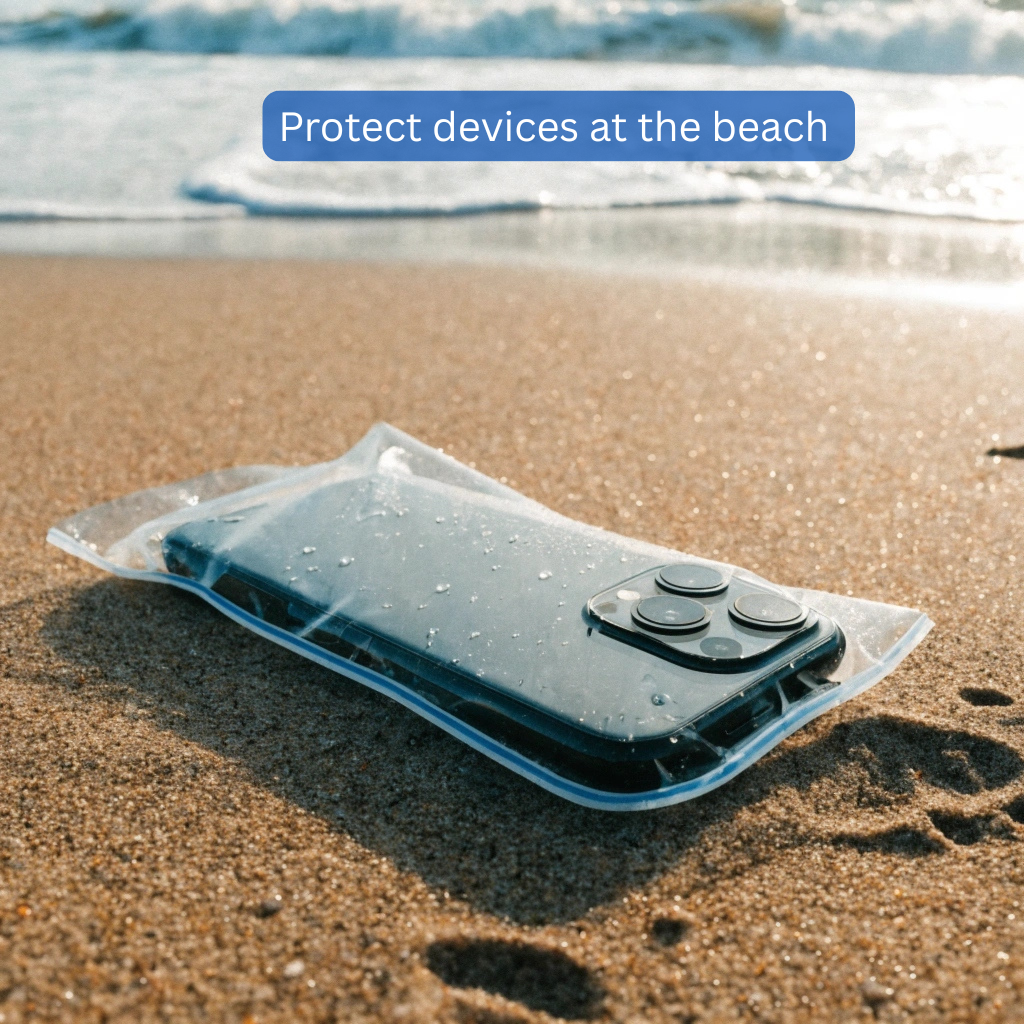
Protect devices at the beach – this is a no-brainer until you’re drying off your phone with a beach towel while chips of sand fall out of the phone charging port. During the summers, our shop – BuySellRepairs get lot of devices like phones, tablets, and speakers that have been damaged by water, overheating and sand. The fun fact is – beach is actually very unfriendly to electronics: saltwater short-circuits internal circuits, the fine sand gets into all the gaps and cracks, and the direct sunlight exceeds safe operating temperature. Some good to know information can save you from a costly repair bill – or a replacement you didn’t budget for.
The Real Cost of Skipping Phone Protection from Sand and Water
Most people assume their phone can handle a splash. Many modern handsets carry an IP67 or IP68 rating, which sounds reassuring – until you realise those ratings were tested in still, clean, fresh water under controlled lab conditions. Saltwater and moving surf are a different story entirely. Salt accelerates corrosion of the tiny connectors and solder joints inside your device, and water resistance seals degrade naturally over time. Phone protection from sand and water, then, can’t rely on your device’s built-in rating alone.
BuySellRepairs suggest a straightforward fix: use a properly sealed waterproof pouch rated IPX8 for your phone whenever you’re near the water. Dry bags originally designed for kayaking work equally well for tablets and cameras. These create a reliable barrier that your device’s own seals simply weren’t designed to provide in harsh beach conditions.
How to Protect Electronics from Beach Sand
You can protect devices at the beach by following these simple things. Sand damage is slower and sneakier than water damage, which makes it more dangerous in some ways. To protect electronics from beach sand, you have to think about every gadget you’ve brought along – not just your phone. Wireless earbuds are especially susceptible – the mesh grilles fill up with sand and the audio quality is permanently reduced. Fitness trackers, smartwatches and portable speakers face same kind of risk.
Keep the audio jack in the headphones case, when not in use. The case should be kept in a closed zip-lock bag to avoid problems with the salt water. When off the beach, use a dry, soft brush (an old toothbrush) to clean speaker grills, buttons and ports. Do NOT use compressed air directly in a port since it may drive sand further into the device.
Steps to Prevent Water Damage to Devices
The worst thing one may do is charging a wet or sanded device. When water gets into the device, shut it off immediately, clean out the SIM tray and dry it in an open area for at least 1 hour, before inserting the SIM tray and connecting any cable. When the moisture indicator in the charging port of your iPhone alerts you to moisture, don’t dismiss it and risk the connector fusing.
If saltwater was involved, do not take risk, bring it to a professional like BuySellRepairs as soon as possible. The faster corrosion is treated, the better the recovery odds.
Keep Devices Cool in Hot Weather
Heat is the threat people most consistently underestimate. The phones are supposed to work properly at temperatures up to around 35 °C (95 ° F). The temperature of a closed bag can rapidly increase into the danger zone for lithium-ion batteries (above 55 °C). The damage is an ongoing and irreversible process. Excessive heat will reduce battery capacity, may result in unexpected shut down and in severe instances, may lead to unsafe swelling.
To keep devices cool in hot weather, put the devices in an insulated pouch in a shaded area with the faces down, to keep them cool. Never leave electronics in the parked under the sun. If the phone does get hot and keeps on shutting off, let it cool in the shade before turning it back on again. Don’t force restart if the device is hot, this would stress the battery. You can take professional help from BuySellRepairs, if the device keeps getting hot.
A Quick Pre-Beach Checklist
Next time you plan your beach trip, include an insulated bag to keep everything cool, a waterproof pouch for your cell phone, and a sealed bag for your ear buds and cables. Do not charge devices until they are dry and sand free.
And if something does go wrong, don’t wait – bring your device to BuySellRepairs promptly. Fast action is the single biggest factor in whether a water- or sand-damaged device is recoverable. Your devices work hard for you every day; a little beach prep keeps them working when you get home.
FAQs
1. Can I bury my phone in the sand to keep it cool?
No! Sand can enter ports, speakers, and buttons. To protect electronics from beach sand, keep devices in a sealed pouch or bag instead.
2. Is ocean mist safe for my phone if it never touches the water?
Not really. Salt in sea spray can settle on your device and cause corrosion over time. It’s important to prevent water damage to devices even when you’re not swimming.
3. Can I charge my phone with a power bank on the beach?
Yes, but make sure both devices stay dry and shaded. This helps keep devices cool in hot weather and reduces the risk of overheating.
4. Will sunscreen damage my phone?
Surprisingly, yes. Sunscreen residue can clog ports, stain cases, and affect screen responsiveness. Clean your hands before handling your device for better phone protection from sand and water.
5. Is a zip-lock bag enough to protect my phone?
It helps in a pinch, but it’s not fully waterproof. For proper phone protection from sand and water, use a certified waterproof case.
6. Can beach heat permanently damage my battery?
Yes. Repeated exposure to high temperatures can reduce battery life and performance. Always keep devices cool in hot weather by storing them in the shade.
7. My phone survived one beach trip. Does that mean it’s safe?
Not necessarily. Sand and salt damage can build up slowly. Continue to protect devices at the beach every time you visit, even if you’ve been lucky before.
8. Can I use compressed air to remove beach sand?
Be careful. Compressed air can push sand deeper into the device. If you need to protect electronics from beach sand, gentle cleaning is usually safer.
9. Do smartwatches need beach protection too?
Absolutely. Water resistance doesn’t always mean sand resistance. Protect devices at the beach by rinsing compatible smartwatches with fresh water after exposure to salt and sand.
10. Does airplane mode help at the beach?
Yes, a little. Airplane mode reduces background activity, which can help keep devices cool in hot weather and extend battery life during long beach days.